


Introduction
After what felt like years of debate over whether to raise interest rates, the Federal Reserve finally moved. On September 16, the Fed raised its benchmark interest rate by a quarter percentage point, bringing the federal funds rate to 3.75%–4.00%. It was the first rate hike since July 2023.
Why now? Inflation is still running hotter than the Fed would like, and rising energy costs aren’t helping. The Fed’s job is to keep inflation under control while keeping the labor market healthy, which apparently requires making money more expensive. Who knew?
There are plenty of downsides to a rate hike. Borrowers take it on the chin with higher rates on credit cards, auto loans, and mortgages. Existing bond prices can fall, and stocks can come under pressure.
That said, interest rates can also work to your advantage. George Kamel of The Dave Ramsey Show has said, “Wealthy people earn interest; broke people pay interest.”
That might be a little harsh considering plenty of financially responsible people have mortgages, student loans, and other debt. But the underlying point is worth considering. If you’re earning interest on savings, this could be good news. If you’re carrying credit card debt, congratulations! Your financial life just got a little more annoying.
Let’s look at the winners, the losers, and what I’m doing with my money.
A quick reminder, because the lawyers told me to: this is not financial advice. I am not a fiduciary, a CPA, or even particularly good at assembling IKEA furniture. This is just me sharing my strategies, investments, stocks, index fund strategies, what I'm buying, and where I plan to take those investments. Everyone’s financial goals are different. Some of you might want a yacht; others just want to stop looking at their 401(k) statements. No financial decisions should be made solely on this newsletter, which is for informational and entertainment purposes only and is not a substitute for advice from a qualified professional who actually knows your situation and charges by the hour.
Also, if you find this newsletter helpful, please share it with one friend who might find it useful by using the button below.

High-Yield Savings Accounts Become More Attractive
If you’ve been reading Practical Money for a while, you know that I strongly believe that every single dollar I have needs to earn its keep. I do that by keeping my free cash in a combination of money market funds, ETFs like SGOV and JAAA, CDs, bonds, and high-yield savings accounts.
When market rates rise, online banks fight for your deposits by raising yields. Some banks increase their rates following a Fed hike, while others sit back and say, “nah, we good.” Banks aren’t exactly known for their overwhelming generosity.
This is why it’s worth comparing what you’re earning with what other institutions offer. One of my biggest financial pet peeves is people who have tens of thousands of dollars sitting in savings accounts earning practically nothing.
For instance, we used to bank with Chase. Their “Premier” savings interest rate is 0.02% APY, and for that, you need a linked checking account and a $15,000 daily beginning balance to get the $25 monthly fee waived. We use CIT Bank Online for our emergency fund, which yields 3.75% (on balances of $5,000 or more).
Let’s say you have $50,000 sitting in savings:
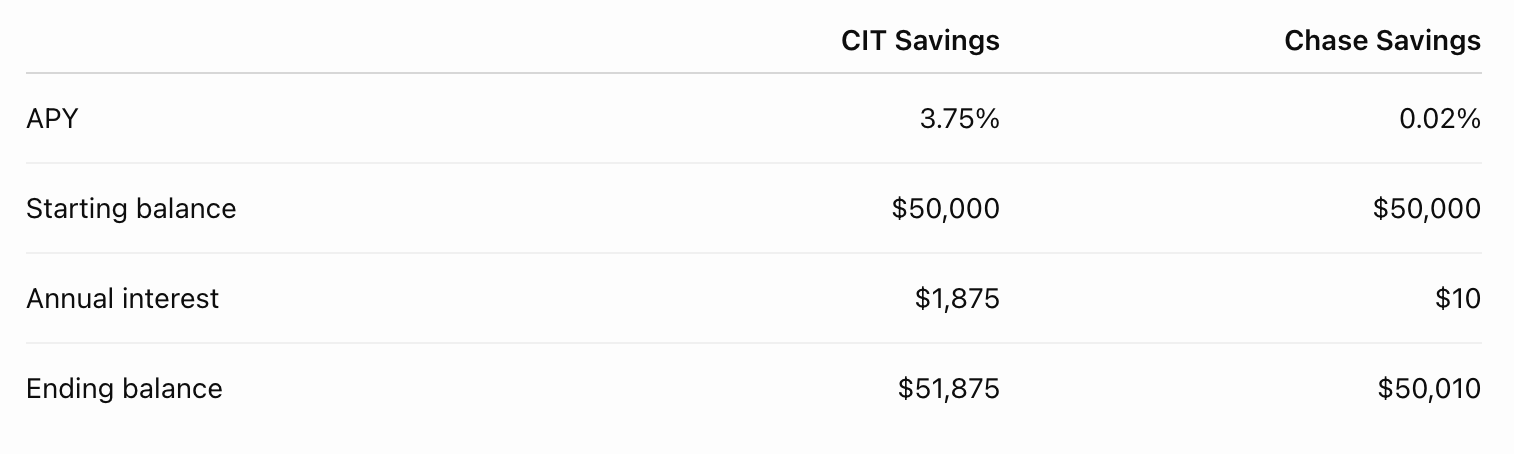
That’s a $1,865 difference.
Same $50,000. Same year. No stock-market risk required. One bank just pays you a lot more to hold your money. Apparently, loyalty to your bank is worth about $1,865 a year. Personally, I like keeping the money. If you’re worried about the hassle of switching banks, ask yourself this: Would you spend an hour or two moving money between accounts for $1,865?
Just remember that savings rates are variable, and banks don’t necessarily pass Fed rate increases along to customers. Compare fees, withdrawal rules, and deposit insurance, too. I wrote an article listing my favorite HYSAs back in 2023 here. CIT Savings remains our main HYSA with a 3.75% APY on balances of $5,000 or more.
Some other alternatives include:
Sofi Savings (3.3%): I’ve used this account in the past, and it was solid. For a limited time, they are offering a 0.90% boost for new customers, bringing the yield up to 4.2% for six months, as well as a cash bonus up to $400.
AMEX High-Yield Savings Account (3.1%): Another account we’ve had in the past. This is a good option if you’re looking for more of a brand name.
EverBank (4.2%): I have never used this bank, which is why I listed it last, but they do have the highest rate (without promotions) that I’ve seen. You earn a rate of 4.2% APY, and there is no minimum balance or monthly maintenance fee.
Money Market Funds Could Pay You More
My free cash in my investment accounts at Fidelity sits in money market mutual funds. These funds invest in short-term government debt and high-grade paper, meaning their yields quickly adjust whenever the Fed tweaks interest rates.
When short-term rates rise, the funds can reinvest in newly issued securities offering higher yields. Over time, that can translate into higher income for investors.
Of course, the exact yield depends on the fund’s holdings, expenses, and market conditions. And a rate hike doesn’t guarantee every fund’s yield will immediately increase by the full quarter-point.
Still, if you’re keeping a substantial amount of cash in a money market fund, higher short-term rates can be your friend. Here are the money market funds I use or have used, along with their 7-day yield:
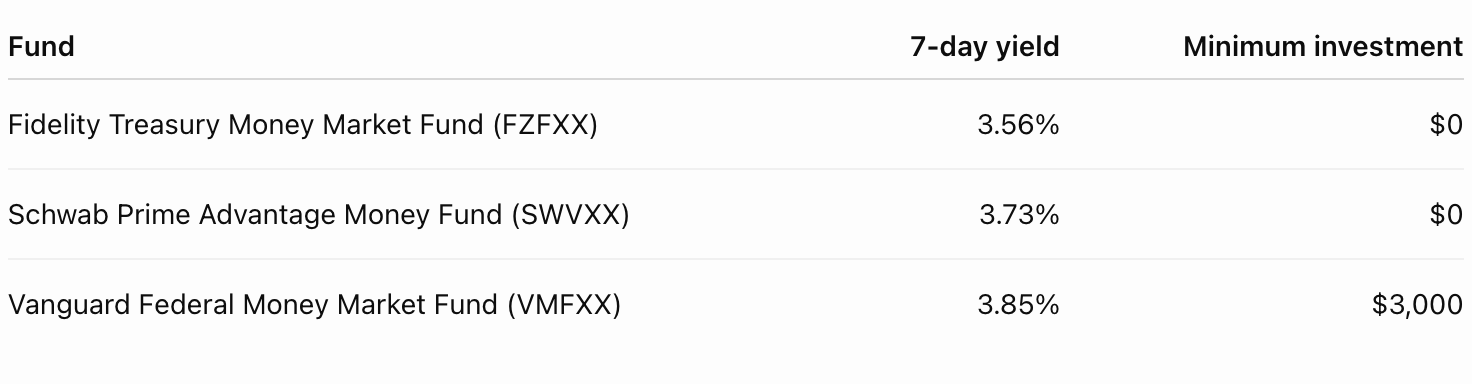
The beauty of these funds is that your cash can earn income while you decide what to do with it. It’s like putting your money to work while you’re still figuring out its next assignment.
CDs Are Back, Baby!
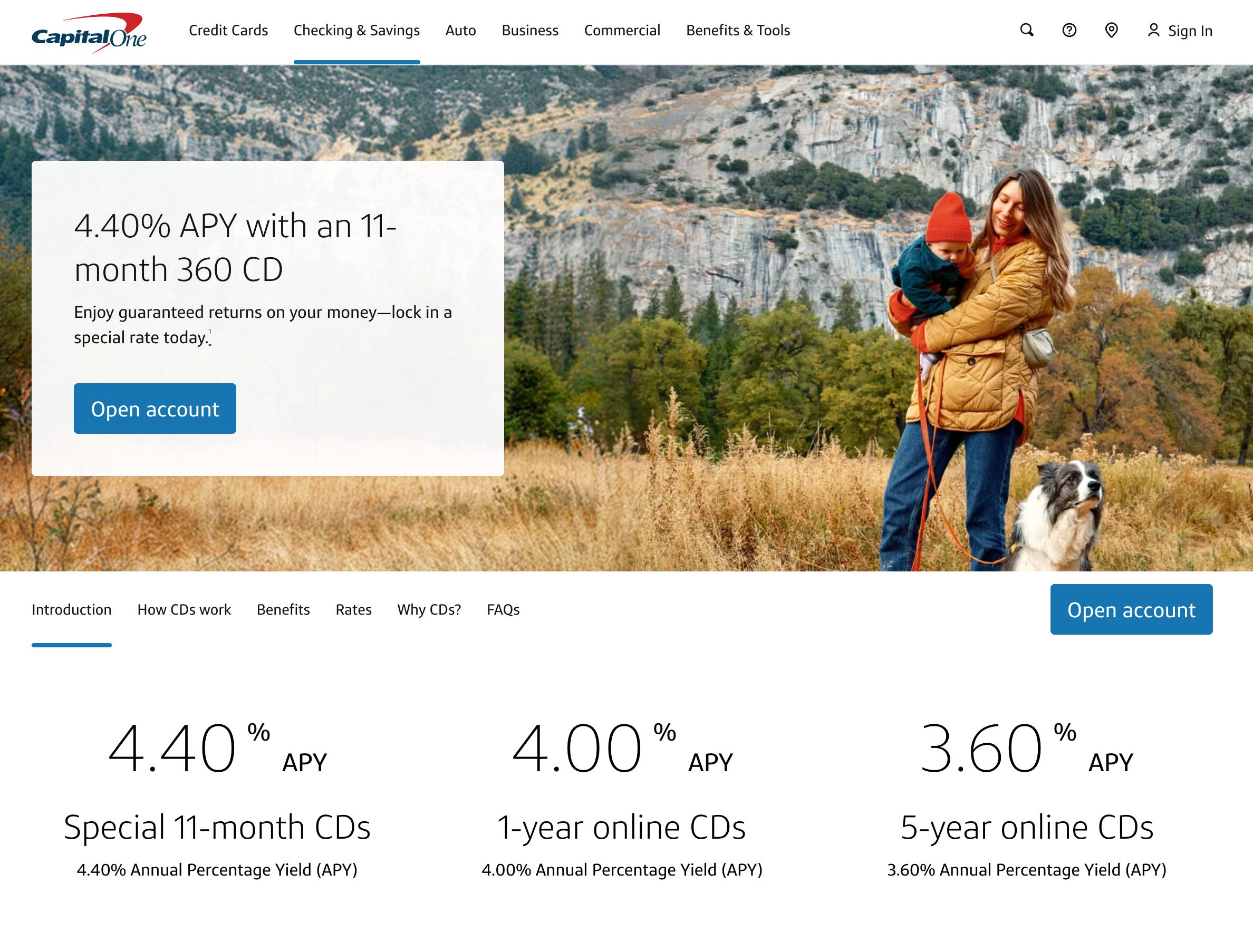
Remember certificates of deposit (CDs)? Those things your grandparents used before everyone decided trading crypto options on an iPhone was the only path to wealth? Well, with interest rates rising, CDs deserve another look.
A CD is pretty simple: You deposit money with a bank for a fixed term (3 months to 5 years), and the bank pays a guaranteed rate. Unlike savings yields, which fluctuate when the Fed moves, a CD locks in your yield regardless of what happens next.
Beware: locking in today’s CD rate can be a double-edged sword. If you lock into a 12-month CD paying 4.5% and the Fed continues raising rates, newly issued CDs might start paying 5% or more. Meanwhile, you’re stuck earning 4.5% until your CD matures, unless you’re willing to pay an early withdrawal penalty.
On the other hand, if the Fed reverses course and starts cutting rates, that 4.5% CD suddenly looks pretty attractive. You’ll continue earning your locked-in rate while savings accounts and money market yields potentially decline.
So, should you lock in now or wait for higher rates? If I knew exactly where interest rates were headed, I’d probably be writing this newsletter from my private island instead of staring at financial charts.
The strategy I use is a ladder with a mix of CDs, Treasury bonds, agency bonds, and corporate bonds. I revealed my portfolio for this strategy a couple of years ago, which you can read here.
Instead of putting all my money into a single CD or bond, I spread it across multiple CDs and bonds with different maturity dates to generate monthly income. Here is a quick look at my fixed income portfolio that provides monthly revenue:
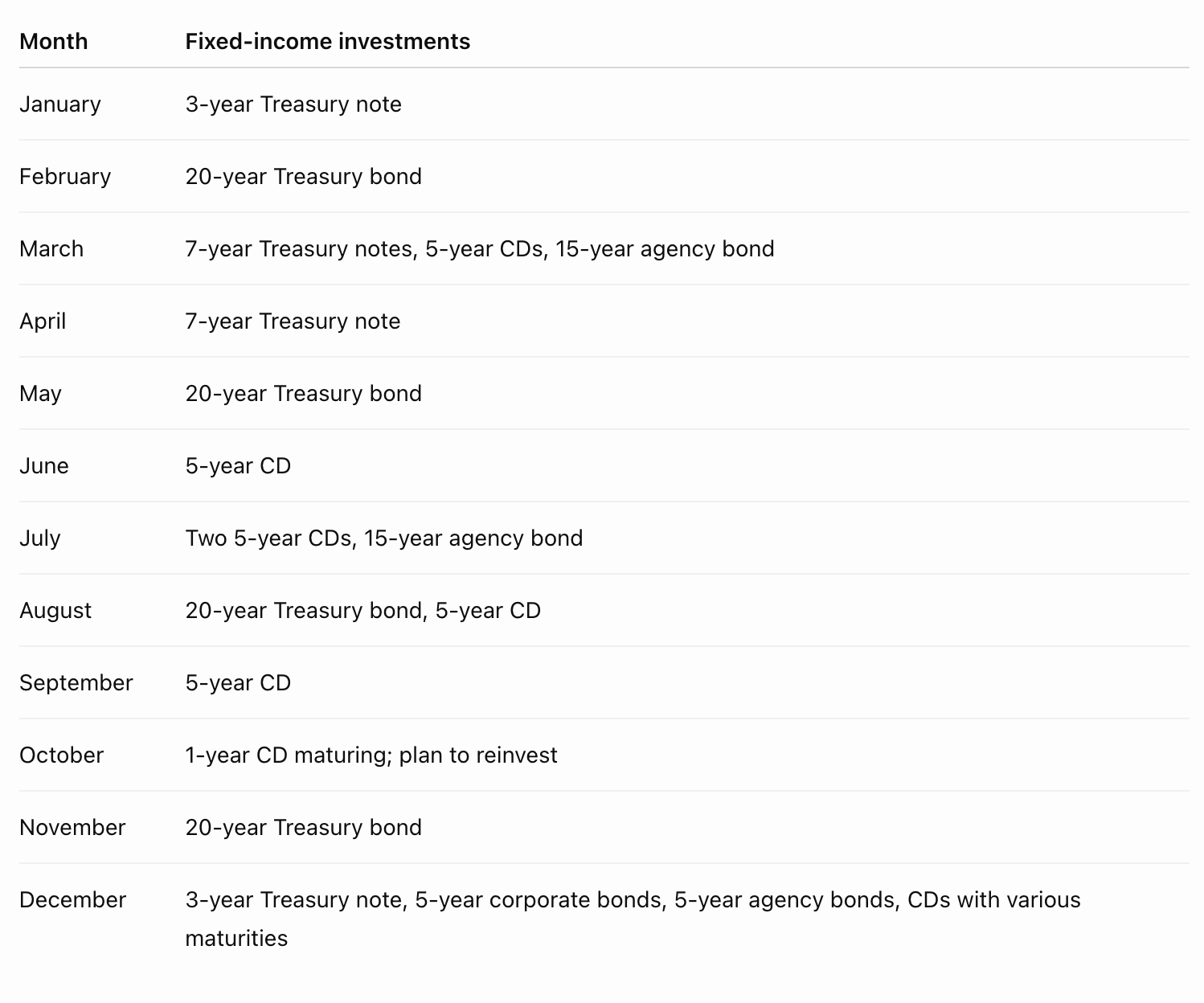
Of course, you don’t need fixed-income investments every month to generate monthly income. Semi-annual bonds pay interest every six months, so a structured mix from January through June generates passive cash flow every single month of the year. When a position matures, I can reinvest at today’s rates or move that money elsewhere, like into stocks if there’s a market dip.
New Treasury Bills and Other Short-Term Investments May Offer Better Yields
Higher short-term rates can also benefit investors purchasing newly issued Treasury bills and other short-term fixed-income investments.
If you’re building a ladder as I mentioned in the prior section, or keeping some of your portfolio in short-term government debt, higher market yields may mean more income when you reinvest maturing funds.
This is one reason I like having options for the cash portion of a portfolio. Depending on your needs, you might compare:
High-yield savings accounts for accessible cash.
Money market mutual funds for brokerage-account cash. This is where I keep cash that will eventually be used to purchase investments like stocks and ETFs.
Treasury bills for short-term government-backed investments.
CDs for savers willing to lock up money for a specified term.
Each has different trade-offs involving liquidity, taxes, insurance, and yield. The highest advertised yield isn’t automatically the best investment. One advantage of U.S. Treasury securities is that their interest is generally exempt from state and local income taxes. Depending on where you live and your tax situation, that can make their after-tax yield more attractive than a CD or savings account.
Also Read
Here we go: The cons and what you can do
Of course, higher interest rates aren’t all sunshine and money market yields.
Borrowers can face higher costs on credit cards, auto loans, and variable-rate debt, while mortgage rates may also rise depending on market conditions. Existing bond prices generally fall when interest rates rise, and stocks can come under pressure as borrowing costs increase and investors reassess valuations.
Higher rates can also slow economic growth, potentially leading to reduced spending, slower hiring, or even a recession. And while savers may enjoy better returns, those gains don’t necessarily keep pace with inflation.
In short, the Fed’s rate hike is great if you’re earning interest, not so great if you’re paying it, and potentially concerning for just about everyone if it slows the economy too much.
If you’re carrying high-interest credit card debt right now, making a plan to pay it down immediately is the highest guaranteed return on investment you will ever get. I wrote one of my first newsletters about strategies I used to get out of credit card debt after college, which you can check out here.
💡 Practical Money Trivia
You think mortgage rates are high now? In October 1981, the average 30-year fixed mortgage rate reached approximately 18.6%, according to Freddie Mac’s historical data. A $300,000 mortgage at that rate would cost roughly $4,650 per month in principal and interest alone. At 6%, that same loan would cost about $1,799. That’s a difference of roughly $2,850 per month.
Conclusion
The Fed’s latest rate hike is a reminder that interest rates affect almost every corner of your financial life. For savers, higher rates can mean more income from money market funds, high-yield savings accounts, and short-term Treasuries. For borrowers, they can mean higher financing costs. For bond investors, they can mean falling market prices. And for stock investors, they can create another source of volatility.
Personally, I’ll continue focusing on the things I can control: avoiding high-interest debt and keeping my cash productive.
Here’s my challenge for you this week: Check the interest rate on your savings account.
Seriously. It takes about two minutes.
If you’re earning practically nothing, spend a little time comparing alternatives. You could potentially earn hundreds or thousands of dollars more per year without taking additional stock-market risk. That’s a pretty good return on a few minutes of effort.
That's it for this week! As always, no financial decisions should be made solely on this newsletter, which is for informational and entertainment purposes only and is not intended to be a substitute for advice from a professional financial advisor or qualified expert. If you haven’t already, please subscribe to this newsletter below and never miss an update: